
Direct mail retargeting sends a printed postcard to people who visited your website and left without calling. For a home service company, it is a way to follow up with homeowners who looked at a specific service, such as AC replacement or drain cleaning, and then went quiet. This page explains how it works, what it costs per postcard and which businesses it fits.
Direct Mail Retargeting Definition

Direct mail retargeting is a follow-up method that mails a postcard to someone after they visit your website and leave without contacting you. It works like an online retargeting ad, except the reminder lands in the mailbox. The address comes from website visitor identification, which matches some site visits to a household.
Why Direct Mail Retargeting Matters
A homeowner who reads your water heater page is closer to hiring than someone who has never heard of you. When that person leaves, you usually have no way to reach them, and they may call whoever shows up next in their search. Direct mail retargeting gives you one more chance with the part of that traffic you can match to an address. The postcard can name the service they looked at and carry a phone number tied only to that campaign, so you can see which card produced the call. Published averages give only a rough idea of how mail performs, and many of them trace back to each other. Our direct mail response rate benchmarks, traced to their sources, suggest planning a cold prospect list at roughly 1 to 3 percent response, and a list of existing customers higher than that. It says nothing certain about your market.
How Direct Mail Retargeting Works
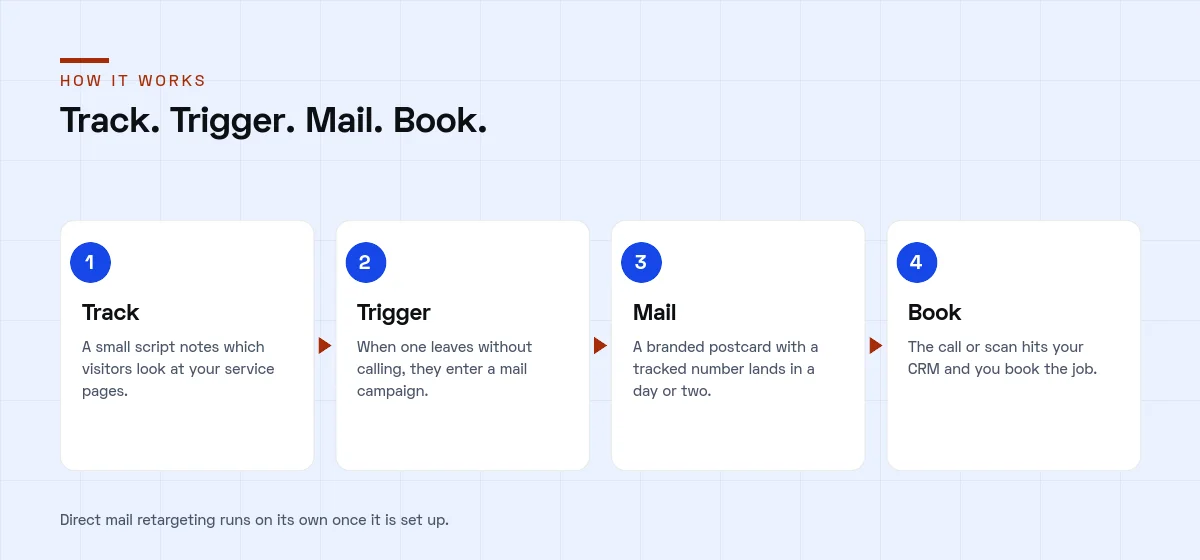
Here is how we set it up for home service companies through SignalForge.
- Track. A small script on your site notes which pages each visitor looked at.
- Trigger. When someone views a service page and leaves without calling, the system tries to match them to a mailing address. Matching is imperfect. Rates are about 20 to 25 percent of residential visitors on the base data setup, 60 to 70 percent with a premium data match and 25 to 35 percent of business visitors. The data type is chosen per campaign, and the rest of visitors stay anonymous.
- Mail. A 6×9 postcard goes out with a QR code and a phone number that exists only for that campaign. First class arrives in about 3 to 5 business days. Marketing mail takes about 7 to 21.
- Book. The scan or call lands in your CRM and a follow-up sequence starts.
The US Postal Service gives similar advice in its guide to retargeting with direct mail. It recommends making the mail piece look like the website that triggered it, so the person recognizes who sent it. It also points out that some responses will go untracked, because people may read the card and search for you later without scanning the code.
Direct Mail Retargeting vs Digital Retargeting
Digital retargeting shows ads to past visitors on other websites and social apps, based on browser cookies or ad platform audiences. Direct mail retargeting sends a printed card to a matched home or business address. Digital ads can reach any past visitor the ad platform recognizes. Mail reaches only the visitors who can be matched to an address, and it shows up as a physical piece in their home. Many businesses run both.
What Direct Mail Retargeting Costs
Costs come in three parts on SignalForge. Postcards are never included in a plan. They are paid from prepaid mail credits funded by your own budget, at $0.95 to $1.13 per 6×9 postcard depending on mail class, plan and how many credits you buy at once. 500 postcards run about $535 to $565. Credits expire 12 months after purchase. Visitor data is billed per visitor named, at cost, up to a monthly lead budget you set. The plan itself is a separate setup fee and monthly fee.
Direct Mail Retargeting Examples
These are illustrations based on the rates and prices above. They are not client results.
Illustration 1: An HVAC company in July. A homeowner reads the AC replacement page twice and leaves. The visit is matched to a household, and a first class postcard about AC replacement arrives in about 3 to 5 business days. It carries a QR code to book an estimate and a campaign-only phone number.
Illustration 2: A pest control company. A visitor reads the termite inspection page. Termite work is less urgent than a broken AC, so the company uses marketing mail, which arrives in about 7 to 21 business days and costs less per card.
Illustration 3: The math for a small month. 400 residential visitors view service pages and leave without calling. At the base rate of about 20 to 25 percent, about 80 to 100 might be matched. Mailing 100 cards first class at the Flex price of $1.13 each comes to $113 in postcards, plus the visitor data billed per visitor named.
Who Direct Mail Retargeting Fits
It fits home service companies with at least a few hundred website visitors a month, a big enough average job to cover the postcard, someone who answers the phone and customers in the US. It does not work for very low traffic or customers outside the US.
Related Terms
- Website visitor identification: matching some website visits to a household or business, which supplies the address for a retargeting postcard.
- Answer engine optimization: shaping your online information so AI assistants name your business and send people to your site.
- Conversion rate: the share of visitors who call or book, which retargeting aims to raise.
- Local search intent: signs that a searcher wants a nearby provider, which makes their site visit worth a follow-up.
- Near me search: searches like “AC repair near me” that bring ready-to-hire homeowners to your pages.
- Map pack: the group of local businesses Google shows with a map, a common source of service page visits.
- Google Business Profile: your free Google listing, which sends many visitors to your website in the first place.
Frequently Asked Questions About Direct Mail Retargeting
Does direct mail retargeting work?
It can, for businesses with enough traffic and a big enough average job. Results depend on your match rate, your offer and how fast your team answers the phone. We do not promise a response rate.
How much does direct mail retargeting cost?
On SignalForge, each 6×9 postcard costs $0.95 to $1.13 depending on mail class, plan and volume, and 500 postcards run about $535 to $565. Letters and other sizes are on our direct mail price list. Visitor data is billed per visitor named, at cost, up to a monthly lead budget you set. Plan fees are separate.
How fast does a retargeting postcard arrive?
First class arrives in about 3 to 5 business days. Marketing mail arrives in about 7 to 21 business days. Both count from the day USPS receives the mail. Faster mail costs a little more per card.
Is direct mail retargeting legal?
It can be done legally in the US when the business discloses visitor identification in its privacy policy, offers a clear way to opt out of mail and follows state privacy laws, which vary.
Can you mail every website visitor?
No. Only visitors who can be matched to an address can get a postcard. On SignalForge that is about 20 to 25 percent of residential visitors on the base data setup, 60 to 70 percent with a premium data match and 25 to 35 percent of business visitors.
To see how we run this for home service companies, read about Embers™, the postcard follow-up for visitors who left your site.